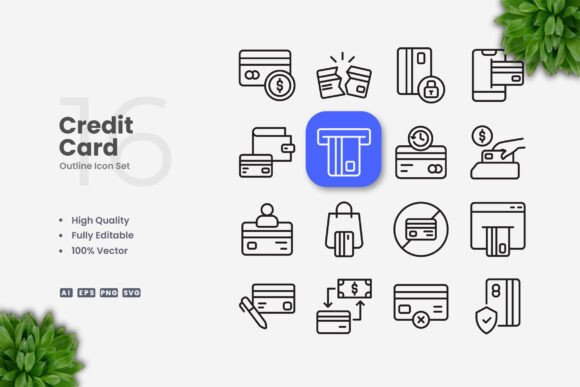
Credit Card Icons for Creative Projects
Credit card icons are essential visual elements that enhance user experience and communication in a variety of digital and print media. Whether you're designing a mobile app, creating a website, or developing marketing materials, these icons provide clarity and consistency. Their simple and clean design makes them adaptable to different contexts, ensuring they remain effective across platforms.
These icons are not just functional; they also add a professional touch to your work. With their high-quality vector format, they can be resized without losing clarity, making them ideal for use in various formats such as social media posts, infographics, banners, and more. Their customizable nature allows designers to tailor them to fit specific brand identities or project requirements.
Why Choose Simple and Clean Icon Design
Simple and clean icon design is a powerful approach that prioritizes clarity and usability. In a world where users often have limited attention spans, clear visuals can make a significant difference. Credit card icons with minimal details ensure that the message is immediately understood, reducing confusion and enhancing user interaction.
This design philosophy also promotes versatility. A clean icon can be easily adapted to different color schemes, styles, and sizes without compromising its integrity. This flexibility is especially valuable when working on projects that require multiple variations or when integrating icons into existing designs.
Applications Across Different Mediums
The applications of credit card icons are vast and varied. For web developers and designers, these icons can be used in payment gateways, financial dashboards, or e-commerce platforms. Their scalability ensures they look sharp on both desktop and mobile devices, providing a seamless user experience.
In the realm of print media, credit card icons can be incorporated into brochures, flyers, and posters. Their high-resolution PNG files with transparent backgrounds allow for easy integration into any design, maintaining visual quality regardless of the background. This makes them a practical choice for marketing campaigns and informational materials.
For social media and digital marketing, these icons can be used in posts, stories, and advertisements. Their simplicity ensures they stand out without overwhelming the viewer, making them an effective tool for conveying key messages quickly and efficiently.
Customization and Editability
One of the standout features of these credit card icons is their full customization potential. With 100% vector files, users can adjust colors, stroke weights, and other design elements using software like Adobe Illustrator or CorelDRAW. This level of control empowers designers to align the icons with their specific needs and creative vision.
The availability of multiple file formats—such as AI, EPS, SVG, and PNG—ensures compatibility with different design workflows. Whether you're working on a large-scale project or a small graphic, these files offer the flexibility needed to meet various technical requirements.
Practical Tips for Using Credit Card Icons
When incorporating credit card icons into your projects, consider the context and audience. For example, a financial institution may prefer a more formal and professional look, while a tech startup might opt for a modern and sleek design. Understanding your target audience helps in selecting the right style and application.
Consistency is key when using icons across different platforms. Ensure that all icons follow a unified style guide, including color schemes, line thickness, and spacing. This creates a cohesive visual language that enhances the overall user experience.
Testing your icons in different environments is also important. View them on various screen sizes and backgrounds to ensure they remain visible and legible. This step helps identify any adjustments needed before finalizing your design.
Getting Started with Credit Card Icons
If you're new to using credit card icons, start by exploring the available file types and design options. Familiarize yourself with the tools required for editing, such as vector software, and take time to experiment with different styles and layouts. This process helps you understand how the icons can be adapted to suit your specific needs.
Additionally, refer to the included readme.txt file for detailed instructions and tips. This resource provides guidance on file organization, usage, and best practices, ensuring a smooth workflow from start to finish.
As you begin to integrate these icons into your projects, keep in mind the importance of balance and purpose. Each icon should serve a clear function and contribute to the overall effectiveness of your design. By focusing on practicality and aesthetics, you can create visually compelling and user-friendly solutions.