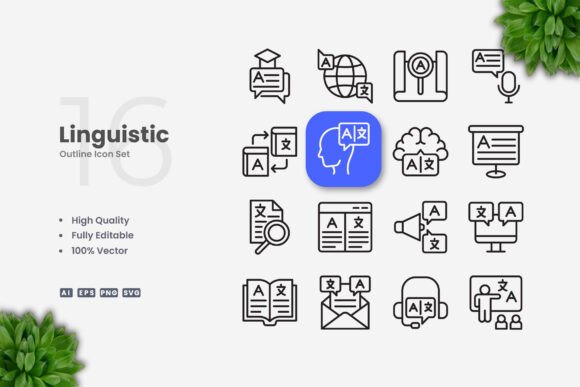
Linguistic Icons: A Versatile Tool for Visual Communication
In today’s fast-paced digital world, visual communication plays a crucial role in conveying messages quickly and effectively. Linguistic Icons offer a unique solution for anyone looking to enhance their design projects with clear, meaningful, and adaptable visuals. These icons are more than just decorative elements—they serve as powerful tools for storytelling, branding, and user engagement across a wide range of platforms.
What Are Linguistic Icons?
Linguistic Icons are a collection of vector-based graphics designed to represent ideas, concepts, or actions through simple, recognizable shapes. Unlike traditional icons that may rely on abstract symbols, these icons often incorporate linguistic elements—such as letters, words, or phonetic patterns—to create a deeper connection between the visual and the message it conveys. This makes them particularly useful for audiences who value clarity and precision in visual communication.
Whether you're designing a website, creating a mobile app, or preparing an infographic, Linguistic Icons provide a consistent and professional look that can be easily adapted to fit your needs. Their clean design ensures they remain visually appealing across different sizes and formats, making them ideal for both digital and print media.
Where and When to Use Linguistic Icons
The versatility of Linguistic Icons means they can be used in almost any setting where visual communication is needed. For example, if you're a content creator working on a blog or social media post, these icons can help break up text and make your content more engaging. They can also be used in educational materials to illustrate complex ideas in a more digestible format.
Entrepreneurs and small business owners often use Linguistic Icons to enhance their branding efforts. Whether it's for a logo, a banner, or a promotional flyer, these icons add a professional touch without requiring advanced design skills. They’re especially useful when you need to communicate a message quickly, such as in a product catalog or a service brochure.
Marketers and advertisers also find value in Linguistic Icons for their ability to simplify complex information. In a world where attention spans are short, these icons can help convey key points at a glance, improving user experience and increasing the chances of your message being understood and remembered.
Real-World Applications Across Different Industries
Consider a teacher preparing a lesson plan. By using Linguistic Icons, they can create visual aids that help students grasp difficult concepts more easily. Instead of relying solely on text, the teacher can use icons to represent ideas like “teamwork,” “problem-solving,” or “communication,” making the learning process more interactive and engaging.
For a freelance designer working on a client project, Linguistic Icons offer a time-saving solution. Rather than spending hours creating custom graphics from scratch, they can choose from a library of pre-designed icons that match the project’s style and purpose. This allows them to focus more on the overall design rather than individual elements.
Businesses that run online stores can benefit from Linguistic Icons by using them in product descriptions, navigation menus, or customer support interfaces. For instance, an icon representing “shipping” or “returns” can help customers find the information they need faster, improving the overall shopping experience.
Why Choose Linguistic Icons Over Other Options?
One of the main advantages of Linguistic Icons is their flexibility. Since they are 100% vector-based, they can be resized without losing quality, which is essential for projects that require multiple formats. Whether you need a small icon for a mobile app or a large banner for a trade show, these icons will maintain their sharpness and clarity at any size.
Another key feature is their customizability. Users can easily change colors, adjust stroke weights, or modify other details using vector software like Adobe Illustrator or CorelDRAW. This level of control ensures that the icons can be tailored to fit any brand identity or design aesthetic.
Additionally, Linguistic Icons come with a variety of file formats, including AI, EPS, SVG, and PNG. This means they can be used in almost any design workflow, whether you're working with graphic design tools, web development platforms, or print production systems.
Things to Consider Before Using Linguistic Icons
Before incorporating Linguistic Icons into your project, it’s important to consider how they will be used and what message they need to convey. Ask yourself: What is the primary purpose of the icon? Who is the target audience? How does this icon fit into the overall design?
It’s also helpful to review the available styles and ensure they align with your project’s tone and theme. While some icons may be more abstract, others may have a more literal or symbolic approach. Choosing the right style can make a big difference in how your audience interprets the message.
Finally, take the time to explore the features included with the package. Understanding the file types, editability options, and licensing terms will help you make the most of your purchase and avoid any potential issues down the line.
Conclusion: Enhance Your Visual Storytelling with Linguistic Icons
Linguistic Icons are more than just a design tool—they’re a practical solution for anyone looking to improve their visual communication. Whether you're a creator, a marketer, an educator, or a business owner, these icons offer a flexible and effective way to convey ideas clearly and professionally.
By understanding how and when to use them, you can unlock new possibilities for your projects and create more engaging, memorable experiences for your audience. With their high-quality design, ease of customization, and wide range of applications, Linguistic Icons are a valuable addition to any creative or professional toolkit.