Utensils and Cutlery, Line Vector Icons: A Minimalist Approach to Culinary Design
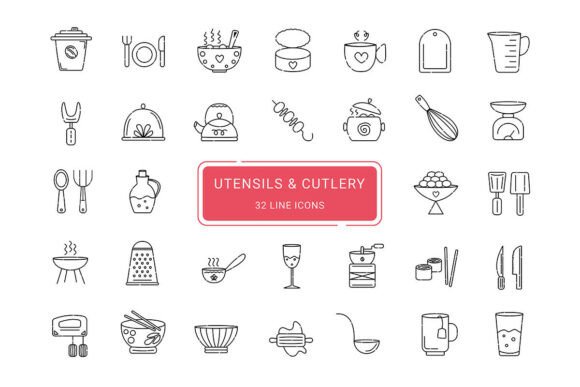
In the ever-evolving world of design, simplicity often speaks louder than complexity. This is especially true when it comes to visual elements that represent everyday objects, such as utensils and cutlery. The Charming collection of 32 line vector icons featuring cute utensils and cutlery offers a fresh, minimalist take on these essential kitchen tools. Each icon is crafted in black outline, isolated on a white background, making them ideal for a wide range of food-related projects.
What Are Line Vector Icons?
Line vector icons are digital illustrations created using mathematical formulas to define shapes and lines. They are scalable without losing quality, which makes them perfect for use across different platforms and sizes. Unlike raster images, which can become pixelated when enlarged, vector icons maintain their clarity at any scale. This characteristic is particularly useful for designers working on everything from mobile apps to large-scale print materials.
The Charming collection of 32 line vector icons includes a variety of kitchen essentials, such as forks, knives, spoons, bowls, cups, pans, kettles, graters, and rolling pins. These icons are not only functional but also visually appealing, with a charming aesthetic that adds a touch of personality to any design project.
Why Utensils and Cutlery Matter in Modern Design
As more people engage with food-related content online, the need for clear, recognizable visual elements has never been greater. Whether you're designing a culinary blog, a recipe book, or a cooking app, having access to high-quality, consistent icons can make a significant difference in user experience and brand recognition.
Cooking and food preparation have become more accessible and popular in recent years, thanks in part to social media and streaming platforms. This shift has led to an increased demand for visual content that reflects the joy and creativity of cooking. Line vector icons provide a versatile solution for designers looking to convey these ideas in a clean, professional manner.
The Rise of Minimalist Design in Food-Related Projects
Minimalist design has gained traction across various industries, including food and beverage. The trend emphasizes simplicity, clarity, and functionality, which aligns perfectly with the use of line vector icons. By focusing on essential shapes and avoiding unnecessary details, these icons create a sense of elegance and sophistication.
This approach resonates with modern audiences who value clean, uncluttered visuals. In the context of culinary design, minimalist icons can help users quickly identify tools and ingredients, enhancing the overall usability of a product or platform.
Practical Applications of the Charming Collection
The versatility of the Charming collection of 32 line vector icons makes them suitable for a wide range of applications. For example, culinary bloggers can use these icons to illustrate recipes, highlight cooking techniques, or add visual interest to their content. Similarly, recipe books can benefit from the consistent style and high quality of these icons, ensuring a cohesive look throughout the publication.
Cooking apps and food delivery services can also leverage these icons to improve user navigation and engagement. By incorporating familiar symbols, these platforms can help users find what they're looking for more efficiently. Additionally, nutrition infographics and educational materials can use the icons to present information in a more engaging and accessible way.
Kitchen Branding and Visual Identity
For businesses operating in the food industry, establishing a strong visual identity is crucial. The Charming collection of 32 line vector icons provides a reliable set of assets that can be used consistently across marketing materials, packaging, and digital platforms. This consistency helps build brand recognition and trust among customers.
Whether you're launching a new restaurant, developing a line of kitchenware, or creating a food-related app, these icons can serve as a foundation for your visual branding. Their minimalist style ensures they remain relevant and adaptable, even as trends evolve over time.
Evolution of Design Trends in the Culinary Space
Design trends in the culinary space have shifted significantly in recent years. While bold, colorful graphics were once the norm, there is now a growing appreciation for clean, simple aesthetics. This change reflects broader societal shifts toward mindfulness, sustainability, and intentional living—values that resonate with many consumers today.
The popularity of line vector icons is a direct result of this evolution. As people become more conscious of their choices, they often prefer designs that are both functional and aesthetically pleasing. The Charming collection of 32 line vector icons meets this demand by offering a stylish yet practical solution for food-related design projects.
Adapting to Changing User Expectations
User expectations have also evolved, with a greater emphasis on usability and accessibility. Designers must now consider how their work will be experienced across different devices and platforms. Line vector icons are well-suited to this challenge, as they can be easily scaled and adapted without compromising quality.
Moreover, the use of consistent visual elements helps users navigate complex interfaces more intuitively. This is particularly important in the context of cooking apps, where clear and recognizable icons can enhance the overall user experience and reduce confusion.
Recommendations for Designers and Creators
For designers and creators looking to incorporate line vector icons into their work, the Charming collection offers a valuable resource. Its diverse range of icons ensures that there's something suitable for almost any project, while its minimalist style allows for easy integration into existing design systems.
When using these icons, it's important to consider the context in which they will be used. For example, a culinary blog may benefit from a more playful and expressive approach, while a nutrition infographic might require a more formal and straightforward style. By tailoring the use of these icons to the specific needs of a project, designers can maximize their impact and effectiveness.
Best Practices for Utilizing Line Vector Icons
To get the most out of the Charming collection of 32 line vector icons, consider the following best practices:
- Consistency: Use the icons consistently across all design elements to maintain a cohesive look and feel.
- Scalability: Take advantage of the vector format to ensure that the icons remain sharp and clear at any size.
- Accessibility: Pair the icons with clear text labels to ensure that all users can understand their meaning.
- Context: Choose icons that are relevant to the content and audience of your project.
By following these guidelines, designers can create visually appealing and user-friendly experiences that effectively communicate the intended message.